Monthly Market Wrap October 2026
When Fear Rises, Quality Gets Paid
Markets looked nervous late in the month, but they did not look broken. The Nasdaq was down 2.52% over October, while the Dow was up 2.82%. Crypto was weaker: Bitcoin was down 6.9% over 30 days, and Ethereum was down 15.84%. The Fear & Greed Index averaged 59.4 over the past 30 days, then ended at 30. The late-month shift points to less optimism and more second-guessing. In conditions like these, the cost is rarely a bad asset. It is a reactive portfolio.
News Digest
$6 Billion Binance Hack Sends Bitcoin, Ether Tumbling; Standard Chartered Expects More Pain: A reported $6B hack became an operational-risk shock for crypto, pushing investors toward liquidity and simplicity. When trust gets tested, correlations rise and weaker tokens tend to gap lower.
Bitcoin, Ether and XRP Selloff Wipes Out $1.5 Billion in Leveraged Crypto Bets: The reported $1.5B in liquidations is a reminder that a lot of “conviction” in crypto is borrowed. Forced selling can overshoot fundamentals, then reset positioning. For long-horizon portfolios, liquidity can become more selective after leverage clears.
Binance Hacker Hunts for Exit Ramps as DeFi Exchanges Pause Markets: DeFi venues pausing markets is a stress test of liquidity plumbing, not just price. In moments like this, the market reprices counterparty assumptions and makes “easy exits” feel less easy. Complexity carries a cost that only shows up when conditions tighten.
Third-Quarter U.S. GDP Increases a Better-Than-Expected 3.4% as September Inflation Accelerates: A 3.4% GDP print alongside firmer inflation keeps the “rates stay high” narrative alive. The US 10-year yield fell 30.4 basis points over October, closing at 4.989% on October 29. That mix kept pressure on long-duration assets and helps explain why growth stocks and crypto can move together during earnings and macro recalibration.
BOJ Holds Rates as Underlying Inflation Aligns With 2% Target for First Time Since 2013: A steady BOJ reduces the odds of disorderly FX moves. EUR/USD at 1.1182 reflected a relatively calm currency backdrop at the time. Sharp FX moves can trigger forced de-risking across global portfolios. By month-end, stress was concentrated in risk assets rather than a global funding squeeze.
The Macro Lens
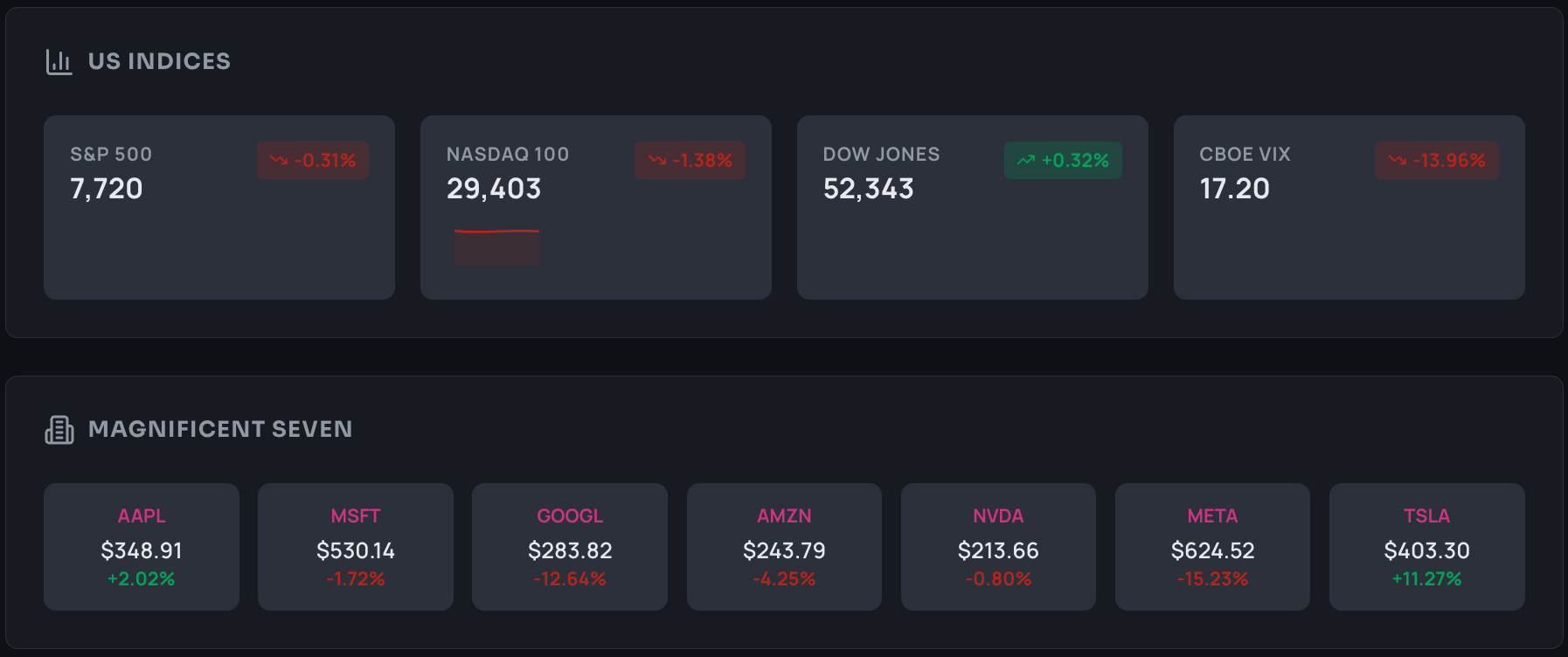
October looked more like a repricing of risk than a systemic event. The VIX closed at 17.20 on October 29. The Fear & Greed Index averaged 59.4 over the past 30 days, then ended at 30. That late-month shift in sentiment came while broad volatility remained moderate.
Rates remained a constraint, even as the 10-year yield eased over October. It closed at 4.989% on October 29, down 30.4 basis points from September’s close. When the “risk-free” option looks competitive, capital can become less patient with uncertain cash flows and long-duration stories.
The dollar firmed slightly over October. DXY closed at 101.85, up 0.40% from September’s close. Gold fell about 4.3% and silver 14.5% over the month, pointing to a pullback across metals rather than a one-day move.
The Stocks Lens
Equities told a clear story: risk was repriced inside the market, not abandoned. The Nasdaq 100 was down about 2.6% over October, while the S&P 500 was up 0.90%. That gap points to pressure on technology and growth stocks. Meta fell 15.23% over the month, while Alphabet dropped 12.64% on October 29. The figures cover different periods, but both show how quickly concentrated positions can come under pressure.
The Dow gained 2.82% over October, pointing to a rotation toward cash-flow resilience and away from story-heavy exposure. US stocks did not move as one market this month.
The VIX closed at 17.20 on October 29. Investors were focused on valuations and earnings, rather than a funding event. Crypto often moves with growth stocks because both can be sensitive to changes in risk appetite.
The Crypto Lens
Crypto traded like a high-beta extension of growth risk. Over 30 days, Bitcoin fell 6.9% and Ethereum fell 15.84%. Bitcoin ended near $78,607, below the $80,000 level that has become a test of confidence. When Bitcoin cannot reclaim a round number and hold it, investors may shorten their time horizon and start managing positions day to day.
ETH/BTC stood at 0.0286 in the latest snapshot. Ethereum’s larger 30-day decline shows weaker relative performance, while the ratio itself is a point-in-time reading.
There was also a stabilising signal in the background. US spot Bitcoin ETFs recorded four consecutive sessions of net inflows through October 29, totalling $17.07M that day. BIT recorded +$12.8M and FBTC +$10.53M, while Grayscale Bitcoin Mini Trust (BTC) saw an outflow of $15.35M. That is not euphoria, but it shows demand persisted late in the month despite fearful sentiment.

Notable Outliers
The outliers show how uneven liquidity has been. Kinetiq (KNTQ) was up 53.84% over 30 days, and Beam (BEAM) was up 67.63%. In a defensive market, moves like these can reflect thin liquidity, which makes short-term strength a weaker signal than it looks.
Convex Finance (CVX) was up 6.60% over 30 days, while Akedo (AKE) was down 35.48%.
Quack AI (Q) was up 215.61% over 30 days, despite sharp price swings during the period. A large monthly gain does not mean the path was smooth or that the move will continue.
Sector Spotlight
This month’s sector story is liquidity sorting. Crypto returns varied widely, from strong gains in some smaller tokens to a steep decline in AKE. That spread points to selective demand rather than a broad-based rise across the sector.
After an operational-risk shock, markets can place a higher premium on simplicity and liquidity. In crypto, that can concentrate flows in the largest, most widely held assets and away from complex DeFi exposure, even as individual altcoins rise sharply.
“Diversification inside crypto” can behave differently from diversification across asset classes. When stress rises, correlations within crypto can move toward one. The portfolio benefit may come more from owning different kinds of assets than from owning many versions of the same risk.
The Contrarian Take
The mistake investors make in a month like this is confusing activity for control. A large liquidation event can make every price move feel like information, when part of it is forced positioning clearing out. After a reset, volatility can move between derivatives and spot markets.
Calm readings in traditional volatility measures can tempt investors to underestimate sharp single-name repricing. That gap can leave investors disoriented, which is when they are more likely to make emotional changes to their portfolios.
A Fear & Greed reading of 30 does not mean the market is safe. It means sentiment was anxious at month-end, and anxious markets tend to punish complexity first. Many investors add complexity at exactly this point, trying to “make back” losses in the most volatile corners.
The ICONOMI Angle
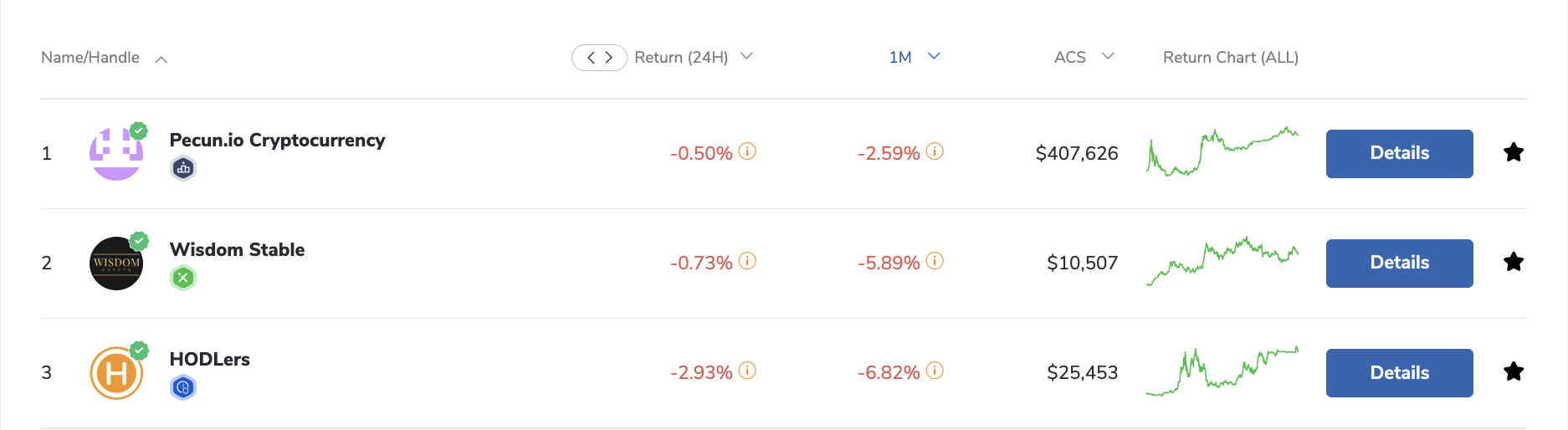
The top performers over 30 days are not telling a story about bravado. They are telling a story about drawdown control. Pecun.io Cryptocurrency (PCC) at -2.59% with top holdings PAXG, and USDC sits close to flat while BTC itself is down 3.7871% over seven days, which is exactly what happens when a portfolio’s return is driven by stabilisers rather than directional beta.
That same defensive footprint shows up in Wisdom Stable (W25STABLE) at -5.89% with top holdings USDC, Theter, and PAXG. Even with Bitcoin down, having stables as core hold changes the return path. It usually lowers beta versus BTC and reduces the probability of large drawdowns, at the cost of lagging during fast rallies.
HODLers (HODLERS) at -6.82% and Bitcoin Vault (VLTBTC) at -4.40%, both with top holdings BTC 100.0%, show how similar portfolios can look when they share the same single risk driver. Sharpe ratio, max drawdown, and beta versus BTC would tend to separate these approaches most clearly during choppy periods like this, when the sequence of returns matters more than the average.
The Month Ahead
Next US inflation print: Rates narrative can shift quickly when inflation surprises.
Next major US payrolls release: Risk appetite often reacts to labour strength.
Big Tech earnings follow-through: Nasdaq volatility remains a crypto correlation driver.
Weekly US spot Bitcoin ETF flow trend: Sustained inflows or reversals can shift tone.
Any post-exploit updates on exchange security: Operational headlines can override fundamentals.
What to Watch Next
Whether the split between stronger Dow performance and weaker technology stocks persists. A move toward broader index strength would suggest risk appetite is returning. If the gap widens, crypto may stay closer to the weaker leg.
Whether the 10-year yield continues easing will shape pressure on long-duration assets. A move away from 5% could relieve some valuation pressure, while a move back up may keep investors selective.
ETF flows are another signpost because they reflect slower-moving investor behaviour. The late-month inflow streak can coexist with weak spot prices. The question is whether that demand holds if negative headlines continue.
Inside crypto, the ETH/BTC ratio is a useful gauge of breadth. A move higher would suggest improving altcoin liquidity. A move lower would point to continued preference for the most liquid assets.
FAQs
Is the crypto selloff a sign of a broader financial panic?
Not on its own. The VIX remained moderate at month-end, and the 10-year yield fell over October. Those signals suggest repricing and rotation rather than a system-wide funding event. Crypto can still swing hard in that environment.
Why is Ethereum underperforming Bitcoin right now?
Ethereum fell more than Bitcoin over 30 days, and the latest ETH/BTC reading was 0.0286. That is consistent with weaker relative performance from ETH and a preference for more liquid assets.
Do Bitcoin ETF inflows matter if the price is falling?
ETF flows matter because they capture steady, slower-moving demand. A fourth consecutive session of net inflows totaling $17.07M on October 29 shows buying interest can persist even during risk-off days. Price can still fall when leverage unwinds or sentiment is defensive, as Fear at 30 shows.

Ready to start your journey with us?
Trusted by over 100,000 users from around the world.