Monthly Market Wrap February 2026
Compression Regime: When Fear Is Loud but Liquidity Is Quiet
Crypto is in a compression regime: prices are holding key levels, but conviction is uneven, and liquidity is thin, so small flows can move markets more than they “should.” Traditional markets are sending mixed signals—broad indices are steady while growth-heavy tech is softer—so narratives can flip quickly without a clean trend.
What matters most right now isn’t whether Bitcoin ticks above or below a round number; it’s whether your portfolio is sized so you can stay consistent through noisy moves without being forced into a decision you’ll regret.
This Month's Rule: If you can’t explain your next portfolio change in one sentence that would still make sense in 90 days, don’t make it today.
News Digest
Fed officials signalled a more hawkish stance as inflation concerns persist. Investors often reach for risk right before “higher-for-longer” reality shows up; disciplined investors keep risk sized so rate narratives don’t force a scramble.
Gold strengthened as geopolitical tensions increased. When uncertainty rises, many investors chase whatever just “acts safe”; disciplined investors treat defensives as ballast that’s added by plan, not by emotion.
The US dollar firmed on global uncertainty. A stronger dollar often tightens financial conditions; investors commonly overreact by swinging from aggressive to all-cash, while disciplined investors use stable reserves deliberately, with rules for when risk is reintroduced.
A major tech earnings disappointment weighed on risk appetite, especially in growth/tech. Investors sometimes assume crypto must follow tech tick-for-tick; disciplined investors expect correlation to vary and manage exposure at the portfolio level.
Bitcoin volatility stayed elevated while trading activity looked light. Thin liquidity can exaggerate moves and trigger impulsive trades; disciplined investors reduce “twitch trading” and rely on pre-set allocation bands.
The Macro Lens
Higher-for-longer rate messaging > What it affects: discount rates and risk-taking appetite across all speculative assets > What investors usually do wrong: increase exposure after a calm stretch, assuming the worst is over, then cut risk abruptly on the next hawkish headline > What disciplined investors do instead: set a risk budget that survives headlines and rebalance only when allocations drift meaningfully from your plan.
Safe-haven bid (gold, USD) alongside selective risk > What it affects: cross-asset leadership and rotations that can look “confusing” in the moment > What investors usually do wrong: chase whichever asset looked safest last week, then reverse when the narrative changes > What disciplined investors do instead: hold a deliberate defensive sleeve (stables/hedges) sized to your time horizon so you don’t need to guess which story wins next.
Thin liquidity + headline sensitivity > What it affects: short, sharp moves that feel informative but are often positioning and flow-driven > What investors usually do wrong: interpret every swing as a signal and over-rotate portfolios too frequently > What disciplined investors do instead: accept that noisy price action is normal in compression regimes and limit decisions to scheduled reviews or clear rule-based triggers.
The Stocks Lens
Volatility is low, but not “risk-free.” The VIX is still subdued, even as parts of tech weaken. That combination often tempts investors to take on more risk than their plan allows because the surface appears calm. For a crypto portfolio, the least stupid move is to assume volatility can return without notice and size exposure accordingly.
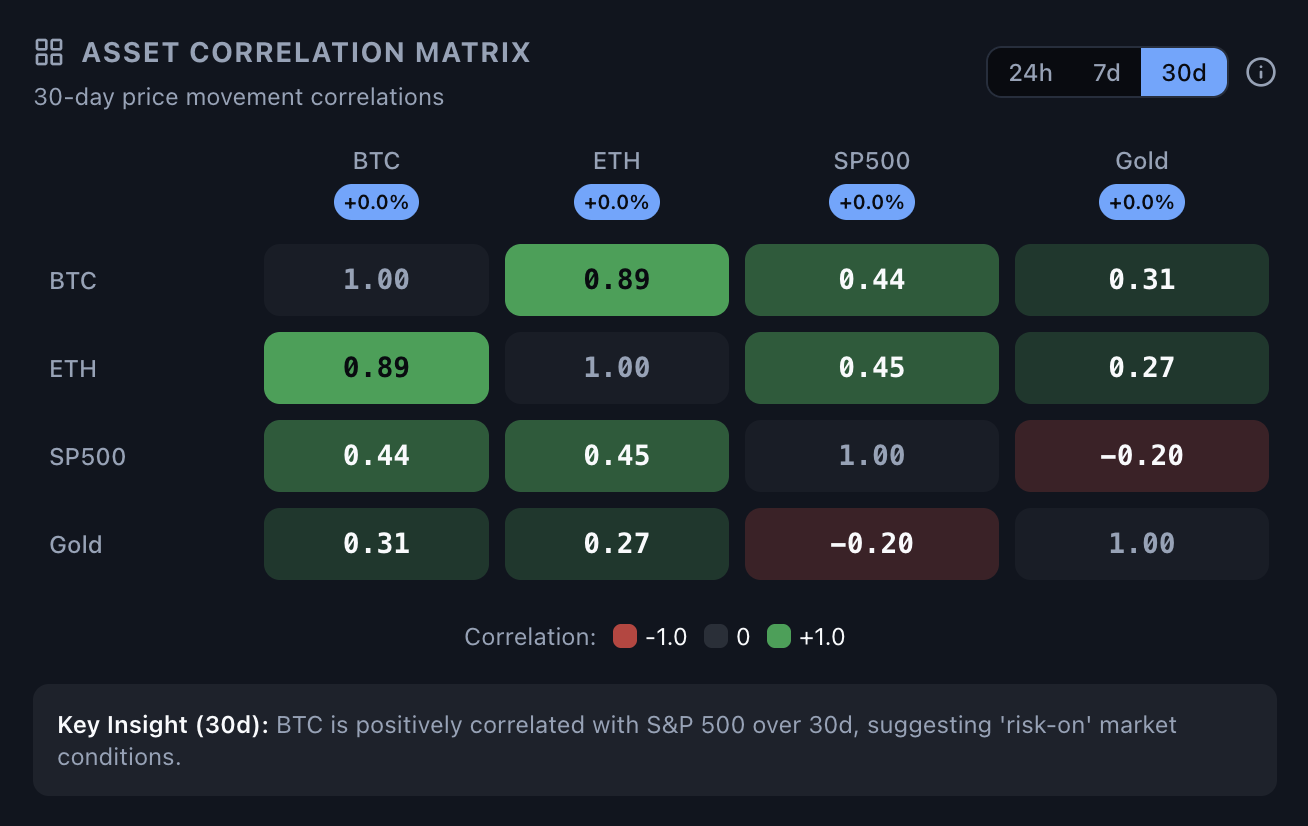
Equity signals are mixed, so correlation can be unstable. When broad indices hold up, but growth leadership fades, crypto sometimes trades “independently” for a while before snapping back into correlation during stress. Investors often mistake short-term decoupling as a permanent change. Disciplined investors treat correlation as something that comes and goes and maintain intentional diversification.
Rotation matters more than headlines. When leadership shifts inside equities, it’s a reminder that markets reprice narratives fast. In crypto, that usually shows up as concentration in the most liquid assets and uneven participation elsewhere. The behavioural edge is avoiding sudden, story-driven portfolio rewrites.
The Crypto Lens
Risk assets (BTC/ETH as proxies): Bitcoin is behaving like a large, liquid risk asset in consolidation—resilient, but sensitive to flows and headlines. Ethereum has shown relative strength over the week, but it remains a higher-beta expression of the same risk appetite, so it can amplify both relief and stress.
Defensive assets (stables, gold-linked exposure, when used): Stablecoin allocations act as a psychological and tactical buffer, giving investors optionality in a market that can jump on thin liquidity. Gold-linked exposure behaves like classic insurance: it tends to attract attention when geopolitical or macro uncertainty rises, which can reduce the pressure to “do something” in crypto.
Liquidity signals (volume, rotation, concentration): Volatility paired with light activity is a warning label: moves can be real, but they can also be easily reversed. In that environment, capital typically concentrates in the most liquid names first, while everything else becomes a rotation trade rather than a durable trend.
This tells us the market is currently rewarding liquidity and defensiveness and punishing overconfidence and late rotations into higher-beta themes.
The One Dangerous Mistake
Freezing in cash without a written re-entry rule
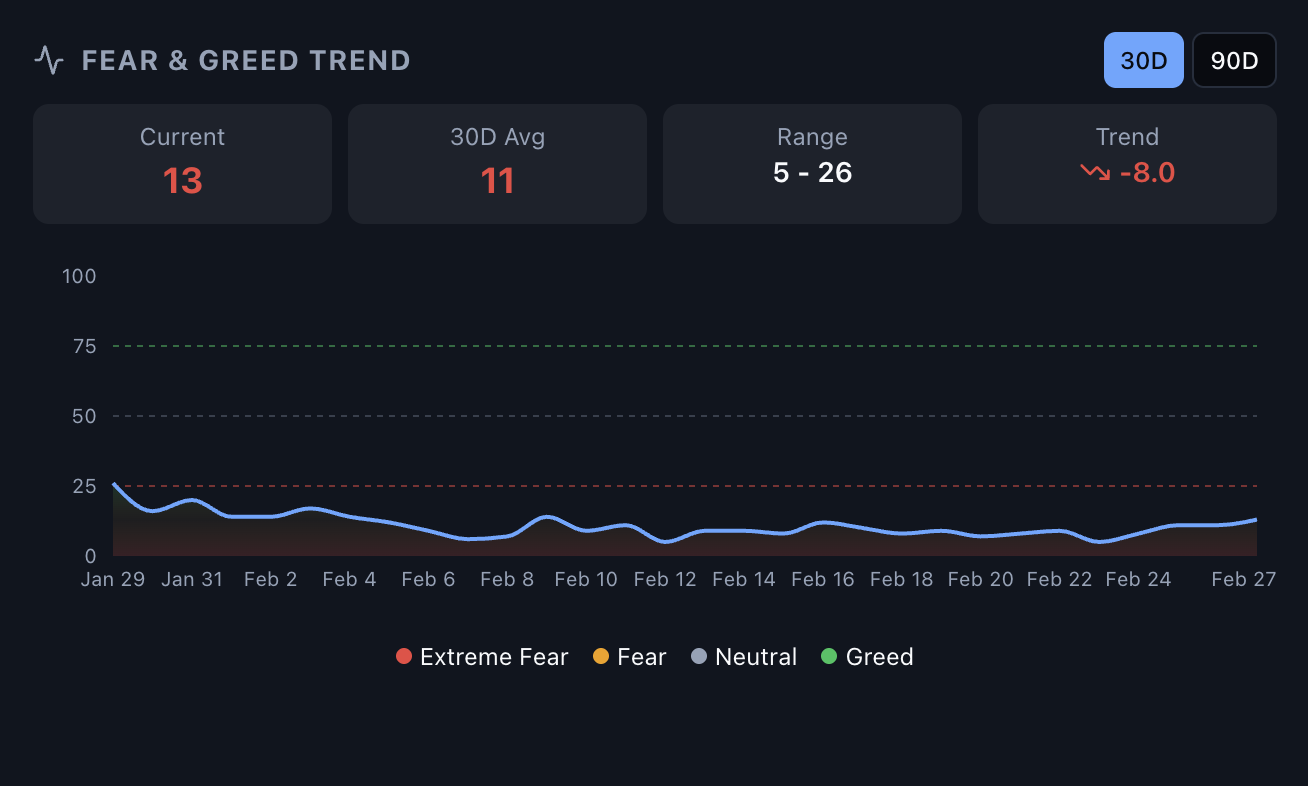
With “Extreme Fear” showing up in sentiment while major assets hold together, many investors choose the same self-defeating compromise: they move to stables to feel safe, but they don’t define what would make them add risk again. That turns “risk management” into permanent hesitation, and it often leads to buying back higher—or never re-entering at all.
In a compression regime with thin liquidity, this is especially costly because sharp moves can happen quickly. If you hold a defensive position, it should come with a clear purpose (time horizon, drawdown tolerance, and a simple rule for when you reassess); otherwise, it’s just fear wearing a risk-control costume.
The ICONOMI Angle
What ICONOMI flows, and portfolios are quietly telling us
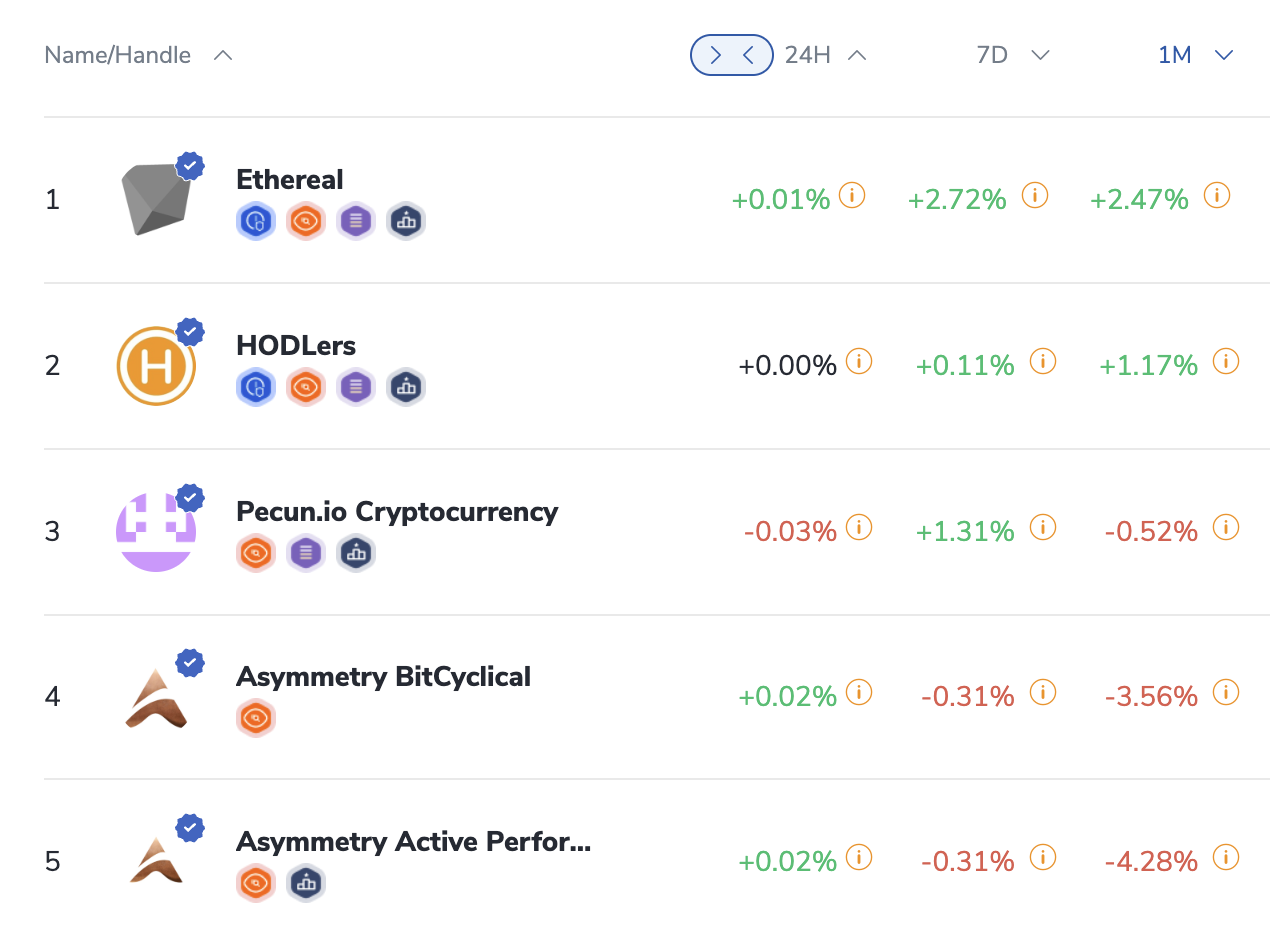
On ICONOMI this month, some portfolios leaned heavily into defensive construction—stablecoin-heavy allocations and, in some cases, gold-linked exposure—while others kept measured exposure to core crypto risk through diversified baskets. The interesting point isn’t “who won”; it’s how the structure changed the investor experience.
Defensive-leaning portfolios used stables and gold-linked exposure as a volatility damper. That works because it reduces forced decisions during noisy markets, not because anyone guessed the next headline.
More aggressive portfolios that kept meaningful crypto exposure had a different job: participate without needing perfect timing. In this regime, the portfolios that tend to hold up behaviorally are the ones that avoid concentration and avoid constant tinkering.
And one point matters more than the rest: Diversification across asset classes matters more than asset selection in this regime. When liquidity is thin and narratives rotate, being “right” on a single coin matters less than having a portfolio that doesn’t push you into emotional exits.
*Don’t invest unless you’re prepared to lose all the money you invest. This is a high-risk investment, and you should not expect to be protected if something goes wrong. Take 2 min to learn more.
The Month Ahead
Upcoming macro inflation prints and labour-market data that can change “higher-for-longer” expectations
Central bank speeches and meeting minutes that can shift the rate narrative quickly
Large-cap crypto ETF flow updates (inflows/outflows can change short-term pressure)
Major protocol upgrade announcements or delays (narrative volatility, not always fundamental)
Regulatory headlines and enforcement actions (often gap-risk for sentiment)
What Investors Usually Do
If your horizon is < 6 months...
Your priority is avoiding forced selling. Some investors choose to keep most exposure in stables and only take risks they can handle through a fast drawdown. The least stupid move is aligning position size with your actual cash needs and sleep-at-night threshold, even if that means participating less.
If your horizon is 1–3 years...
Your priority is consistency. Some investors use a rules-based approach: keep a core allocation to liquid crypto exposure, keep a defined defensive sleeve, and rebalance on a schedule (or when allocations drift beyond preset bands). The least stupid move is reducing decision frequency while keeping a plan for both up and down moves.
If your horizon is 5+ years...
Your priority is staying invested without concentration risk. Some investors choose broad diversification, accept that multi-month drawdowns are part of the deal, and only adjust risk when their life situation changes—not when headlines do. The least stupid move is making sure your allocation is survivable, then letting time do the heavy lifting.
*This content is for informational purposes only and does not constitute investment advice.
FAQs
Sentiment is in Extreme Fear. Should I step aside until it clears?
If stepping aside reduces the chance you’ll make a panicked decision, it can be a rational choice. But only if you also define what would make you reassess. Fear signals are most dangerous when they cause unplanned, open-ended exits.
Bitcoin is holding up while tech is weak. Does that mean crypto is ‘decoupling’?
Sometimes correlation loosens in the short run, especially when flows are different across markets. But correlation tends to return during stress. The disciplined approach is to treat “decoupling” as a temporary condition, not a new law of nature.
Should I rotate into whatever is acting defensively right now?
A defensive sleeve works best when it’s sized and maintained by plan, not added after you feel uneasy. If you’re changing allocations, the test is simple: would you still like that portfolio if the market reverses next month?

Ready to start your journey with us?
Trusted by over 100,000 users from around the world.