Monthly Market Wrap March 2026
Extreme Fear, Mild Dip: The Market’s Favourite Trick
Crypto spent March moving sideways before a short dip. Bitcoin is around $67,339 and Ethereum is near $2,056, both down roughly 3–4% on the week, while the Fear & Greed Index indicates “Extreme Fear”.
Though nothing dramatic happened with the price, sentiment has shifted. And that’s usually where bad decisions start.
News Digest
Fed signals patience on rate cuts: Rates aren’t coming down anytime soon, meaning slower markets, more chop, and fewer clean trends.
Bitcoin volatility jumps after options expiry: Derivatives positioning amplified short-term moves. If you’re long-term, this is just short-term noise.
Europe introduces new AML directives for crypto providers: New compliance requirements are to be introduced. Short-term it can create friction; long-term, it brings legitimacy. Regulation tends to favour larger, more established assets and platforms over smaller tokens that rely on frictionless growth.
Decentralised AI protocol secures a major funding round: Capital is still funding AI-related crypto projects, showing that even in slower markets, specific narratives can outperform. This doesn’t mean they’re safe, just that they’re attracting attention.
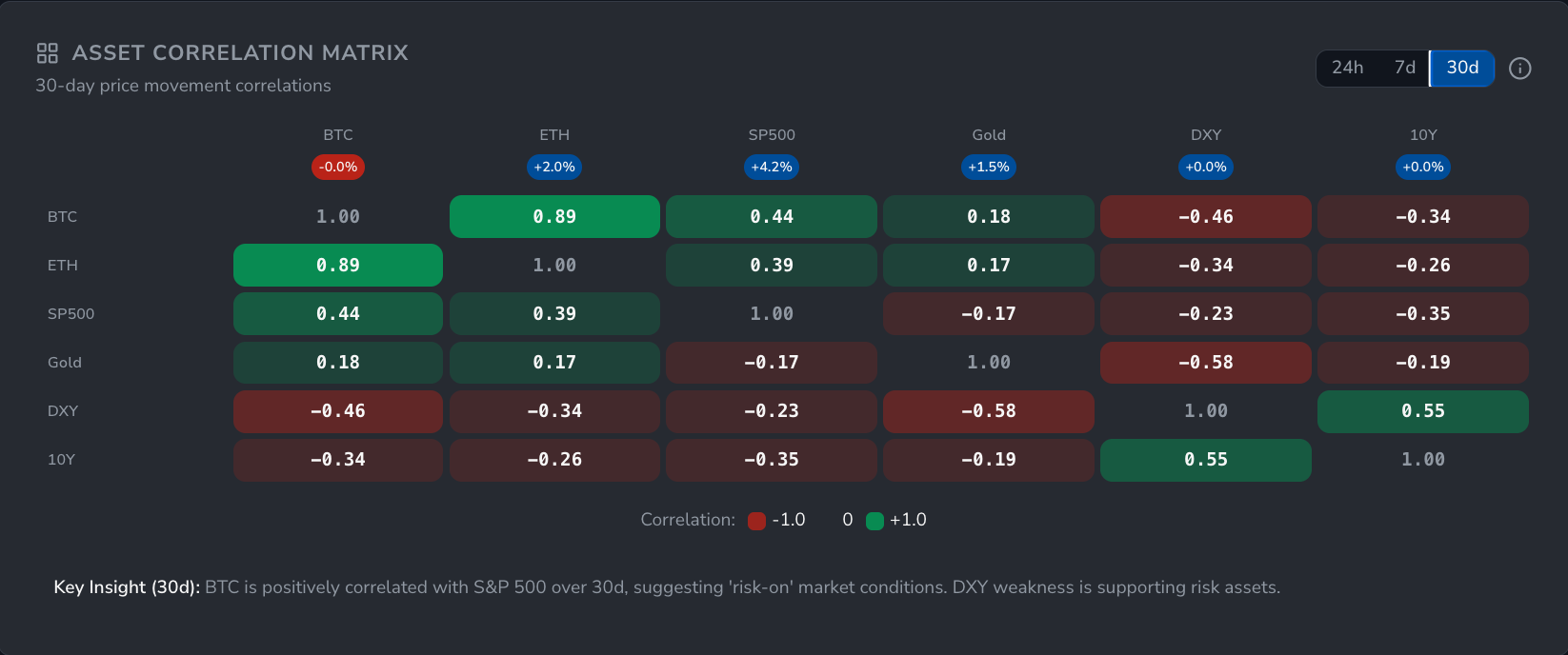
Mixed tech earnings and guidance: Big tech is not moving together anymore. Correlations get messy. Crypto can’t rely on a single “Nasdaq up = crypto up” relationship.
The Macro Lens
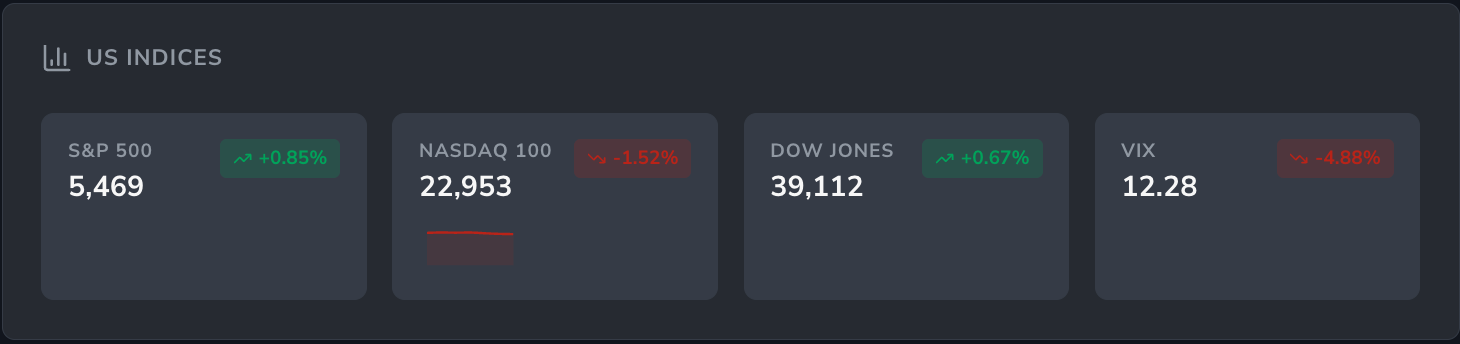
Gold rising while the VIX falls is a quiet warning. Gold is up +1.47% while the VIX sits near 12.28 (-4.88%), which says investors aren’t panicking, but they are hedging. That’s usually a sign investors aren’t fully trusting the rally.
According to the Fed narrative this week, the obstacle is inflation persistence, not growth collapse. That tends to create range-bound markets: rallies fade, dips get bought, and everyone feels wrong. Crypto usually translates that into sharp intraday moves with limited follow-through.
When macro is unclear, your process matters more than your opinion.
The Stocks Lens
US stocks are up, but leadership is cracking. The S&P 500 is 5,468.79 (+0.85%) and the Dow Jones is 39,112.16 (+0.67%), yet the Nasdaq 100 is down -1.52%. That’s rotation, not broad “risk-on.”
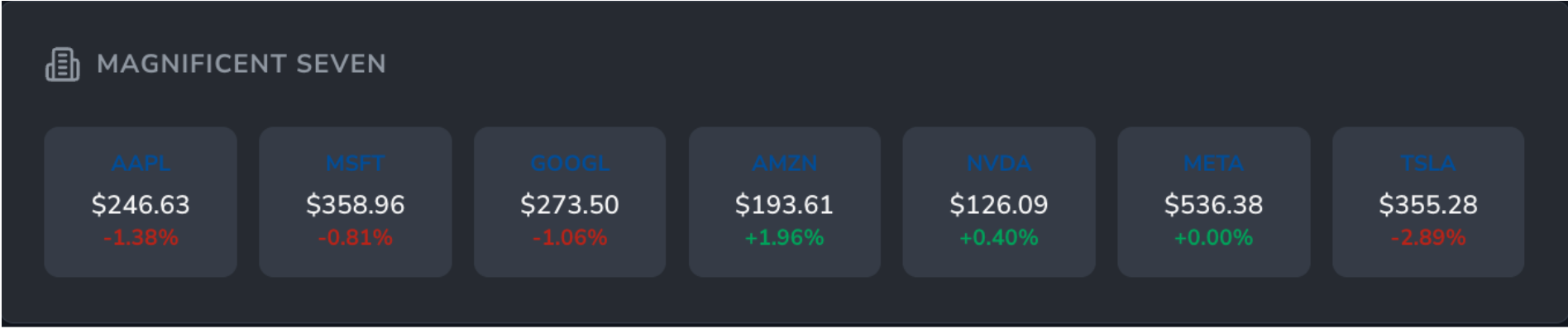
The Magnificent Seven aren’t acting magnificent together. Tesla is -2.89%, Apple -1.38%, Alphabet -1.06%, while Amazon is +1.96% and Nvidia +0.40%. When markets get so selective, blanket narratives stop working.
The Crypto Lens
Bitcoin’s pullback looks normal; the mood doesn’t. BTC sits near $67,339, basically flat on the day (+0.05%) but down ~4.15% on the week. That’s consolidation after a run, not a catastrophe.
Ethereum is holding the psychological line, but not leading. ETH is around $2,056, +0.54% in 24h and down ~3.58% on the week. The ETH/BTC ratio at 0.0305 to a quality first market, “quality first”, not “alt season.”
BTC dominance at 56.2% is a risk-off signal inside crypto. Flows concentrate in majors, while altcoins leg and isolated pumps start to happen.
That’s where mistakes happen. Chasing the strongest weekly performers often leads to late entries and quick reversals.
The ICONOMI Angle
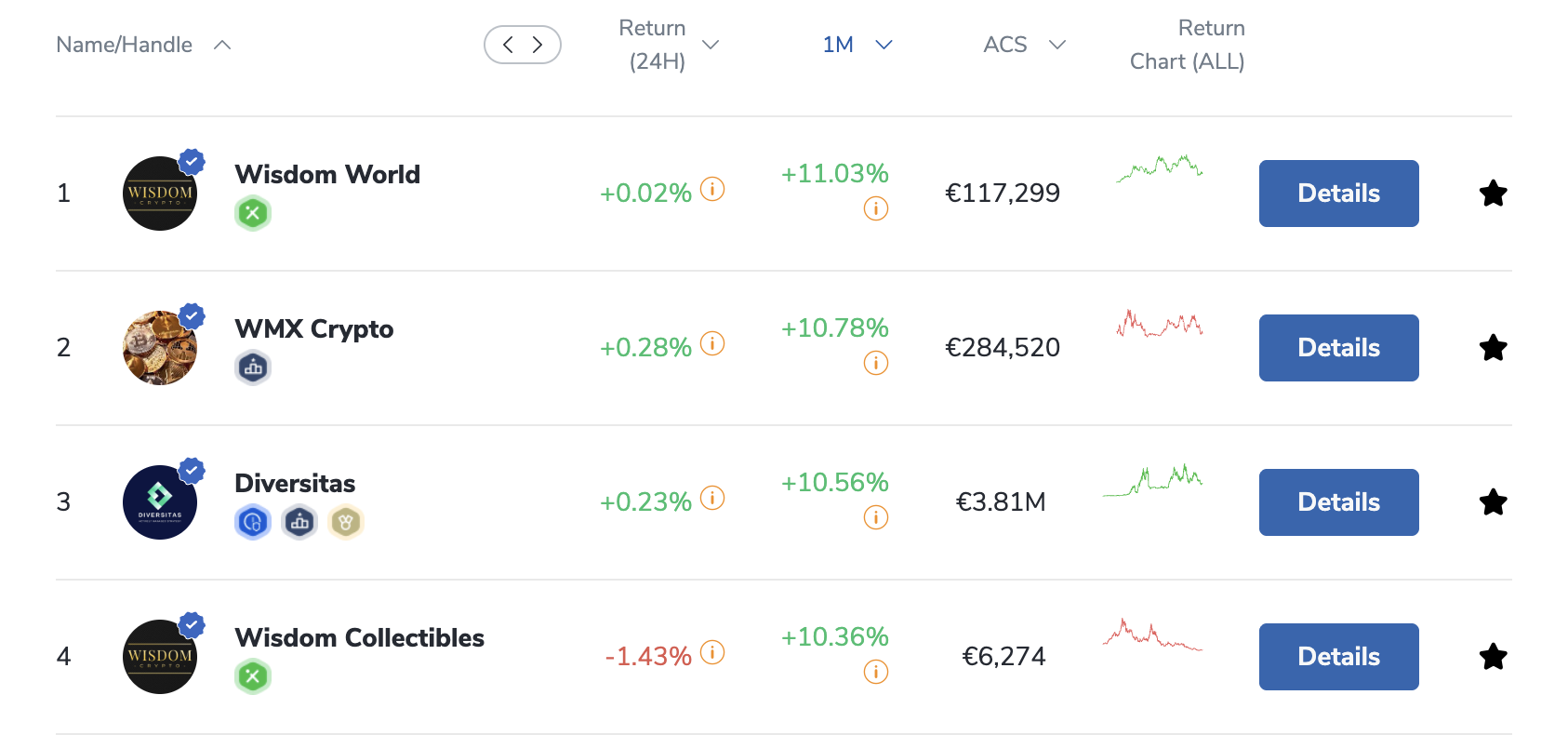
The top ICONOMI performers this month weren’t aggressive bets, they were positioning choices.
Wisdom World +11.03% (BTC 60%, ETH 30%, SOL 5%) and WMX Crypto +10.78% (BTC 43%, ETH 42.7%, SOL 14.3%): diversified “majors-first” allocations. A more balanced approach that led to performance.
Diversitas +10.56% (USDC 100%): a stablecoin-only strategy ranking among the “top performers” shows that the month rewarded capital preservation and flexibility.
Wisdom Collectibles +10.36% (RNDR/FET/CAKE 10% each shown): thematic exposure can work, even without a broader altcoin rally.
The pattern is clear: concentration can top the leaderboard, while stablecoin exposure can quietly rank high when volatility taxes everyone else. That’s a reminder that strategy choice matters more than headlines in this situation.
The Month Ahead
US inflation prints (CPI/PPI) and Fed: rate expectations can shift fast, driving short- term volatility more than changing the long-term thesis.
Monthly/quarterly options expiries: BTC often sees volatility around expiries, especially when positioning is crowded.
Major tech earnings follow-through: Nasdaq sentiment can spill into crypto, even if the correlation looks “off” day to day.
EU compliance updates: headlines tend to pressure smaller tokens while reinforcing flows into majors.
Ethereum upgrade: markets often price narratives early, then react again when details firm up.
What to Watch Next
BTC dominance (56%+): rising dominance puts pressure on alts. Falling dominance signals broader risk appetite.
ETH/BTC (0.0305): ETH outperforming BTC signals improving risk appetite. If it weakens, the market’s stay in “quality first.”
Stablecoin supply ($261B): growth suggests sidelined capital building; contraction suggests liquidity leaving.
Volatility regime shifts: low VIX doesn’t mean low risk. Sudden spikes tend to tighten conditions quickly.
The temptation trade: memecoin spikes versus rebalancing. One is trading noise. The other builds long-term returns.
FAQs
Why is the Fear & Greed Index in Extreme Fear if Bitcoin is only down a few percent?
Extreme Fear often reflects volatility and headline pressure, not just price declines. When markets chop after a rally, investors feel “late” and overreact to small pullbacks. That emotional mismatch is where poor timing decisions happen, especially panic-selling near support.
Does a low VIX mean it’s safe to buy more crypto?
A low VIX signals calm in US equities, not safety for crypto. Crypto can still swing on derivatives positioning, macro surprises, or regulation headlines. Low volatility can also breed complacency, which makes the next volatility spike more damaging when correlations rise.
What does rising Bitcoin dominance actually mean for my portfolio?
Rising Bitcoin dominance usually means the market prefers liquidity and perceived safety over speculative altcoin risk. In practice, BTC tends to hold up better while many alts lag or draw down more. For diversified investors, it’s a cue to check risk limits and avoid chasing short-term outliers.

Ready to start your journey with us?
Trusted by over 100,000 users from around the world.